How to Count Calories Using AI Food Detection

July 29, 2025 • 10 min read
AI food detection makes calorie counting easier and faster. Take a photo of your meal and the system identifies foods, estimates portions, and calculates calories and macros in seconds.
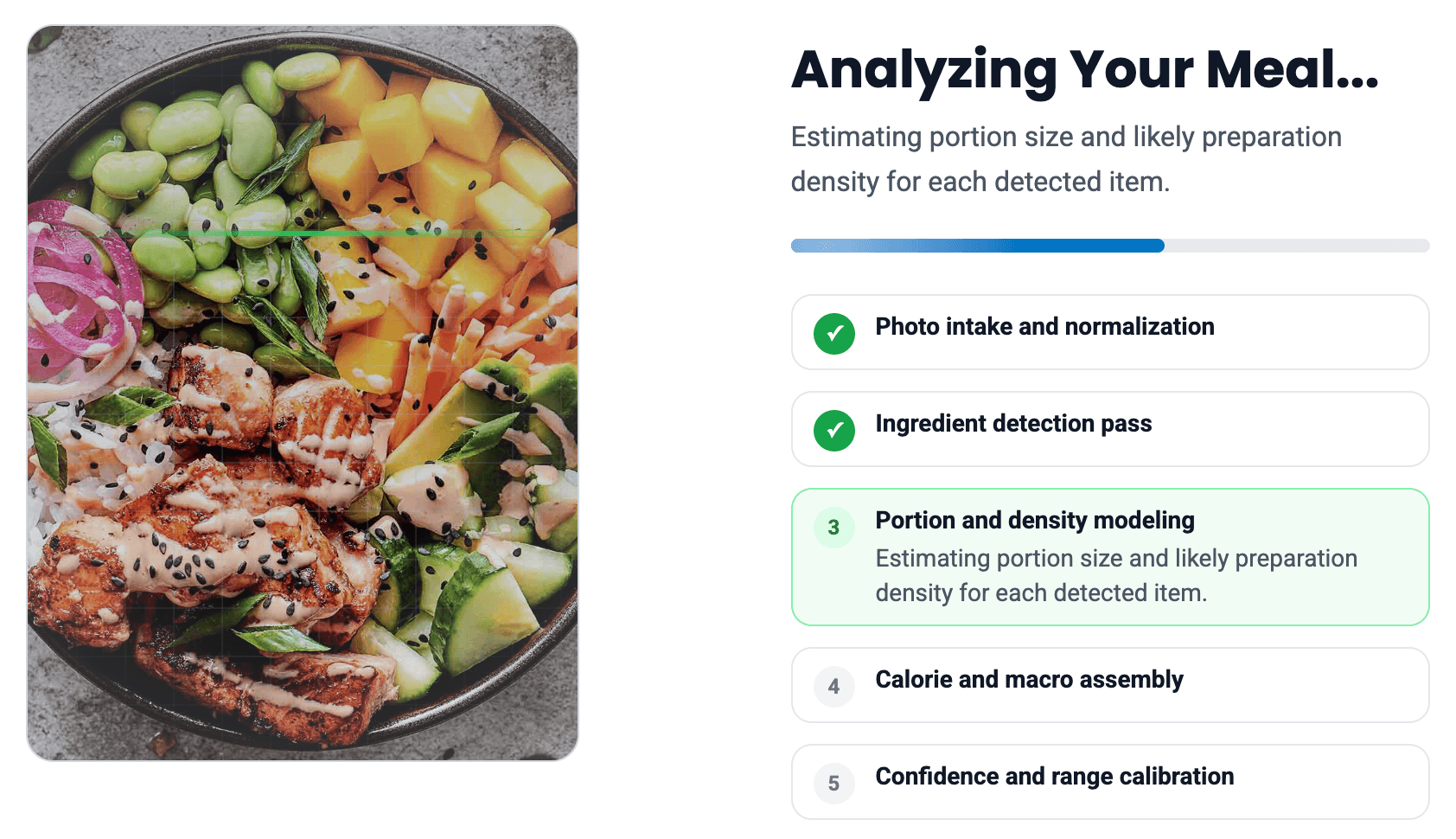
How to Count Calories Using AI Food Detection
AI food detection uses deep learning to analyze meal photos, identify foods, estimate portion sizes, and map the result to nutrition databases. Compared with manual tracking, this can reduce friction, save time, and improve consistency.
- How it works: visual recognition + portion estimation + database mapping.
- Accuracy: often useful directionally for everyday tracking, with known edge cases.
- Benefits: faster logging, lower manual effort, better habit consistency.
- Challenges: mixed dishes, beverages, and multi-component meals can be harder.
Getting Started with AI Food Detection Tools
Getting started requires only a smartphone camera and a stable internet connection. Modern iPhone and Android devices generally provide enough image detail for food recognition. Cloud processing then handles the heavier model inference and returns nutritional estimates quickly.
Camera quality, lighting, and angle strongly affect output quality. Clear shots of all visible meal components lead to better identification and portion estimates.
How Photos Become Nutrition Data
The workflow is straightforward. You take a clear image of your plate, the app uploads it to remote servers, and deep learning models identify likely foods and estimate serving sizes. The app then combines those estimates with nutrition databases to return calories, protein, carbs, and fats.
Accuracy tends to be stronger with separated foods and weaker with complex mixed dishes.
"Nutrition apps with AI-integration are generally better at detecting individual Western foods when they are separated on a plate. However, they often struggle with mixed dishes, such as spaghetti bolognese or hamburgers."
Asian cuisine and beverage-heavy meals may create additional errors because ingredients can be layered, blended, or difficult to estimate from visuals alone.
"This issue is more common with Asian dishes, which usually contain a variety of mixed components that may not be found in the respective apps database, leading to possible errors when calculating the energy amount of a particular meal."
Using What The Food for Calorie Tracking
What The Food is designed to simplify meal tracking from photos. After profile setup, you capture a meal, review AI detections, and save calorie and macro outputs. If detection looks off, retake with better lighting or manually adjust entries.
Standout features
- Multi-item recognition in a single photo.
- Portion estimates from visual cues.
- Calorie + macro breakdown for each meal.
- Database search and barcode support for non-photo logging.
- Progress tracking and AI suggestions over time.
Free vs premium plans
The free plan is useful for basic tracking and exploration, while premium tiers expand usage and unlock deeper analytics and support features.
"What The Food is literally the best calorie tracker. Fastest and most accurate I've ever used."
Daily Tips for AI Calorie Counting Success
Best practices for accurate photos
- Use natural light whenever possible.
- Take top-down shots with the full meal in frame.
- Separate overlapping foods when you can.
- Capture multiple angles for mixed or layered meals.
- Include a familiar size reference when possible.
- Add notes for hidden ingredients like oils, dressings, or sauces.
Using nutrition data effectively
- Review and edit AI results before saving.
- Track weekly patterns instead of obsessing over single days.
- Identify recurring high-calorie foods and adjust gradually.
- Prioritize consistency over perfection.
Conclusion: Make Calorie Counting Easier with AI
AI food detection helps reduce manual logging friction and makes calorie tracking more practical for daily life. The biggest value is consistency: faster entries, clearer trends, and better feedback loops for health goals.
These tools are most useful as practical estimators, not perfect lab instruments. Combine AI with quick human review for stronger decisions over time.
FAQs
Common questions about using AI food detection apps for calorie tracking.